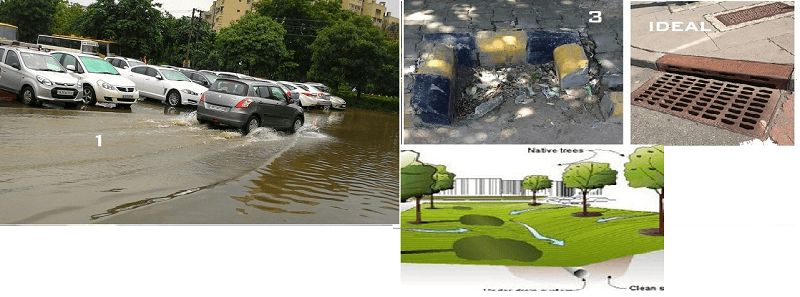
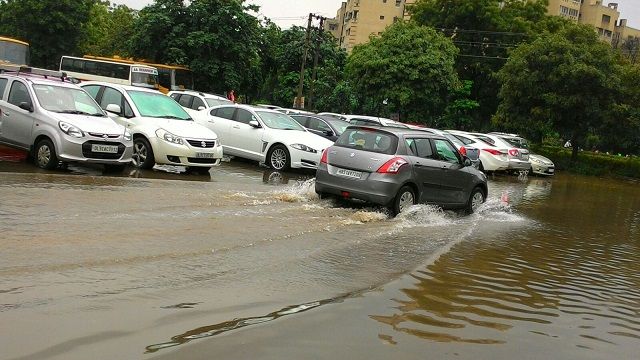
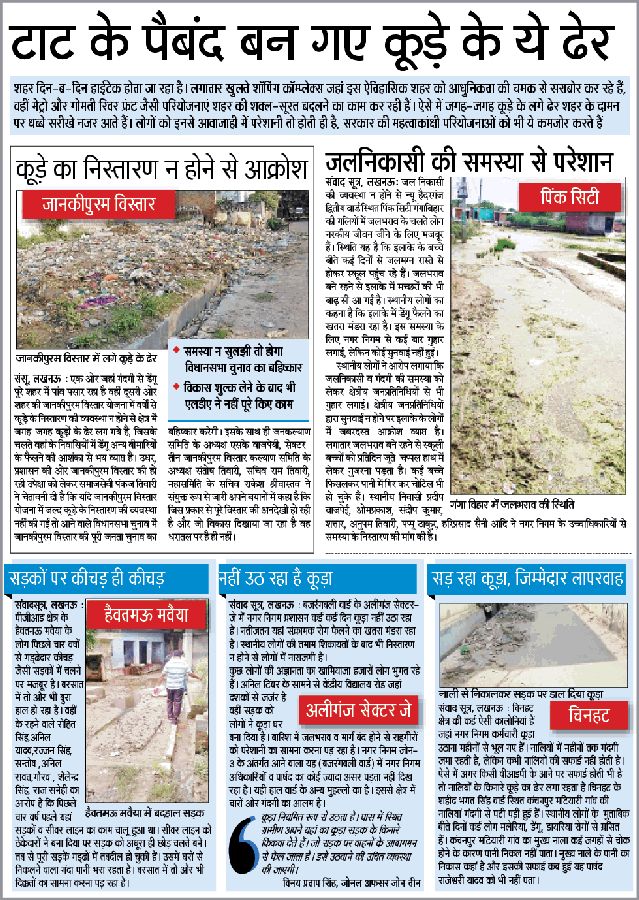
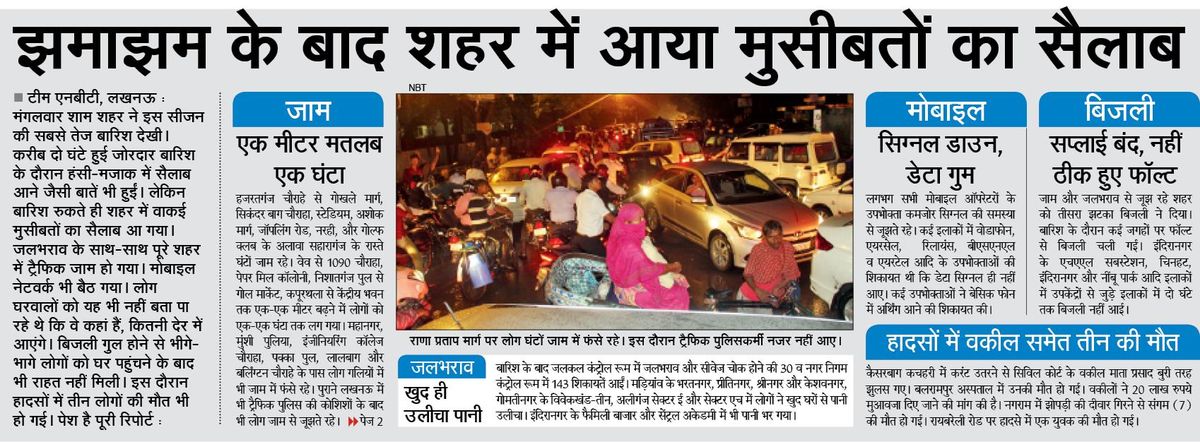
Seen this...
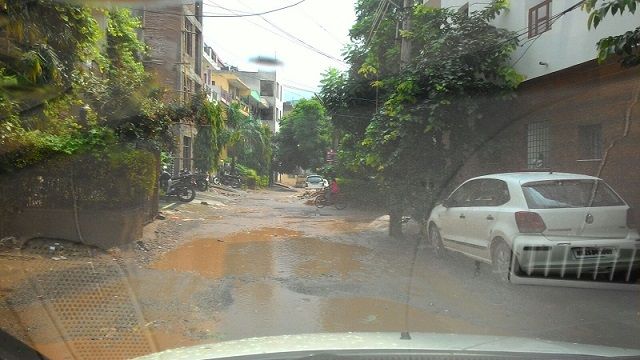
or this...
We bet you have seen worse.
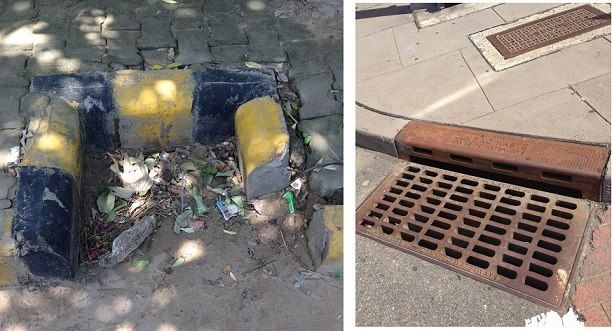
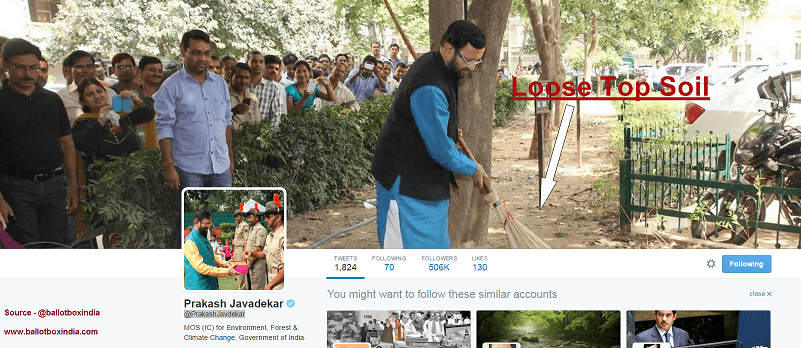
Do you know who is the reason behind it. A work of art like below (left, right is the correct one!), along with various other flaws in urban planning and stormwater management in India as detailed in the main article.
Now to the Main article.
The frequent urban flooding due to flawed and non-existent stormwater management in our cities during the monsoon highlights our perpetual inability to recognize the rainwater as a precious resource. It’s a great irony that on one hand our cities are complaining of rapidly depleting water table and on the other, we are letting the rainwater get washed away into drains and sewers. In turn, also adding increased pressure over the drainage/sewerage network.
Historically the cities have always had natural stormwater outlets culminating into either local watersheds, rivulets or rivers. Water tends to find its way naturally towards the lower points of the topography. Not too back in history the Baolis and stepped wells were common feature of cities designed to redirect storm water into the Ground water.
However callous human intervention has taken it all away. The traditional system has taken a backseat due to unplanned development. Lakes and ponds no more exist in cities. In the beginning of 1960, Bengaluru had 262 lakes. Now, only 10 of them hold water. In 2001, when the collector of Ahmedabad listed the waterbodies in the city following a high court order, he found that 65 of the 137 listed lakes were encroached.
Cities are also replacing the permeable land with impervious surfaces. The problem gets aggravated by the fact that drains do not have sufficient slope to draw water from surface water and channelise it.
By the 1860s, Bengaluru had evolved an intricate system of harvesting rainwater. Laid out in 1866 by then commissioner of the city, Lewing Bentham Bowring, these drains carried rainwater to outlying tanks. But modern Bengalru discounted this security and is now grappling with severe water shortage. So is Chennai, which has traditionally depended on temple tanks, or kulams, for harvesting rain. There are 39 kulams in Chennai, each spanning 0.4-2.8 hectares (ha). The kulams also act as flood-control devices.
Lately, the natural course of storm-water drains, leading to these kulams, has been changed due to unplanned settlement near the catchment areas. The drains now flow directly to the sea without filling the tanks. Storm-water channels also formed an integral part of the forts and palaces of desert cities of Rajasthan. Jaigarh fort in Jaipur is a classic example of this. The fort has three underground sumps, which stored runoff rainwater drained from the Aravallis through well-designed channels. The fort still uses the stored rainwater during peak water scarcity periods in summer.
Urban flooding is absolutely preventable. All that we need to do is to let Stormwater find its right of way.
Stormwater management has two aspects-Qualitative and Quantitative. The learned Engineers in our municipal corporations are already taking care of the quantitative aspect.
Just to reiterate following is the way to go-
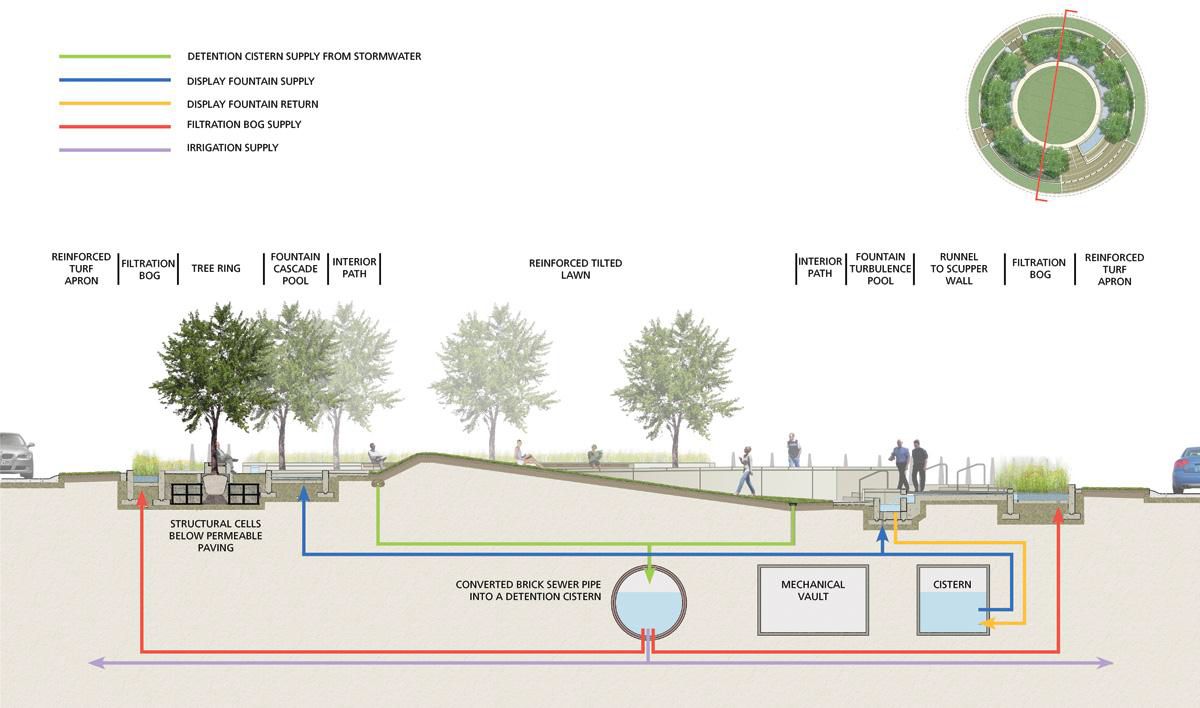
- Keep surface imperviousness under 50%, check Surface run off.
- Promote Green roof over buildings.
- Rainwater harvesting on individual plots is already mandatory in many cities. Its build quality and maintenance is of paramount importance. The municipal bodies need to urgently chalk out a methodology for Quality check. Develop stringent building codes.
- Permeable pavements, grass channels etc are some of the doable things that can be adopted at the community level.
- The urban dense pockets must have a silt free storm water drainage system that is finally connected to some watershed. (A case in the point is that of the city of Gurgaon where the connection of city level storm water drainage network to Najafgarh drain is yet to happen and currently the Badshahpur jheel is the only watershed available to the city. Hugely insufficient this causes massive urban flooding in the old Gurgaon areas and Palam Vihar, every year. This 140 Crore project to connect city level network to Najafgarh drain was sanctioned only in 2014 by the Government. Another project taken by HUDA in 2013, to build 46 KM long box type drain connecting Badshahpur jheel to NH-8 found mixed responses.)
- It is always better not to build very long drains, instead have local catchment areas in the form of lakes or ponds, however utmost care is needed in maintenance of these water bodies lest they become infested with dirt & silt.
On the Qualitative aspect –
Storm-water is a major source of pollution for all types of water bodies. Soil compaction caused by site grading and the expanse of impervious surfaces such as roads & parking lots, produce runoff that contains sediment & other contaminants, including atmospheric deposition, pesticides, fertilizers, vehicle fluid leaks and mechanical waste. Increased storm-water runoff can overload pipes and sewers damaging water quality. The idea behind Storm-water management practices is to ensure removal of about 80% of the average annual post development total suspended solids load based on existing monitoring reports.
Following are some management practices for removal of TSS (Total Suspended solids) from storm-water runoff-
- Infiltration Basin
- Infiltration Trench
- Vegetated Filter Strip
- Grass Swell
- Porous pavement
- Open Grid pavement
- Sand filter Infiltration Basin
- Water quality inlet with sand filter
- Oil/ Grit separator
- Extended detention dry pond
- Wet pond
- Constructed storm-water wetlands Each of above are capable of removing 60-90% of TSS depending on build quality, and are known as Best Management Practices in Storm-water quality control.
Thanks
Ballot box India Team